
How Fun Ideas Turn Into Real Games
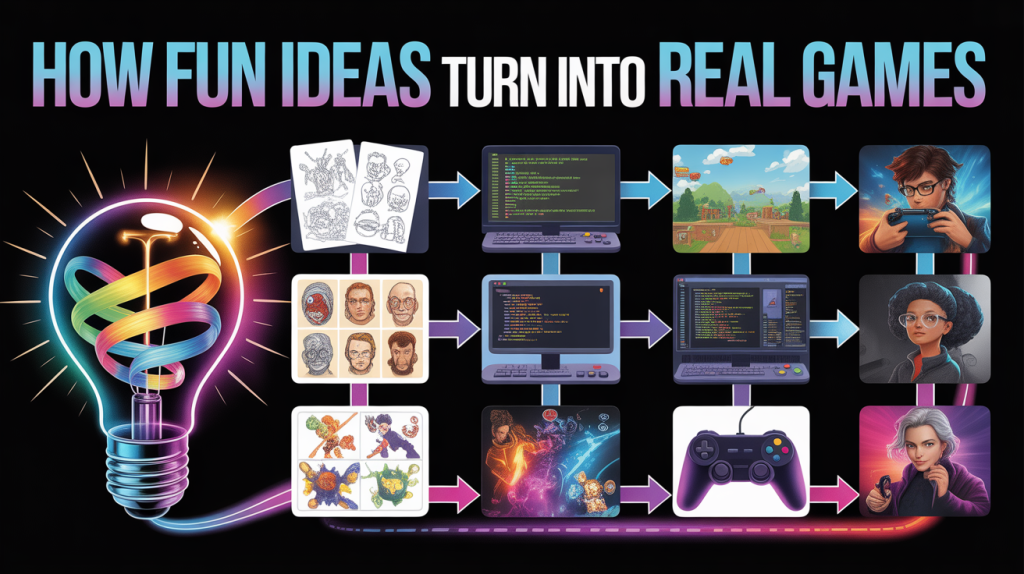
Make Fun Ideas Real Games is about taking a simple idea or trend and turning it into something you can take in your hands and play. It could be a mini competitive game, a creative exercise, or a viral concept that is interactive. You can also use platforms like Astrocade to create digital versions that are easy to distribute and play with others.
Have you ever said to yourself, “I would really enjoy this if it were a game”? A lot of us are stuck watching trends or memes on the internet, and wishing we could get on them. The good news is you don’t have to be an expert game designer for your basic idea to be actually fun.
This is guidance, to show you how to choose a fun concept, add a lo-fi rule-set, and take it for a test spin with your buddies. By the time it’s all said and done, your friends will see how you can take an everyday idea and turn it into a Real Game that other people can play.
Create Games Fast
The first thing you need to do is execute quickly on your ideas. Don’t wait until it’s perfect; using a minimum viable product makes it easier to figure out what works and what doesn’t. Simple and easy-to-use tools like paper, whiteboards, or online tools allow you to visualize your ideas in no time, and get to your next quick iteration.
First, concentrate on the fun rather than the minutiae. A rough version of a game can also be fun to play. The idea is to make a playable space that provides a fast pace, immediate feedback, and excitement. Act fast and stay creative because that’s when your ideas feel real.
Play With Friends
The experience of playing games is always better when you get to do it with other people. Invite a few friends or family members to come on board, run through the rules, and observe. Their input will make your game better, and they’ll help you identify what really works and is fun.
Interacting with other people and socialising in the game makes it all feel more alive. Watching players laugh, battle, or team up provides an energy that’s absent during solo playtests. Turning a concept into an actual game is as much about connection as it is about mechanics.
Add Simple Rules
A good game has rules that are easy to understand. Don’t make things too complicated; tell players the minimum amount of information needed to play the game. Rules (however simple) that are concise and easy to remember keep everyone on their toes, and are essential to prevent confusion, particularly when creating something as accessible as a Wayward game.
And you can add optional twists or mini challenges for more fun. The trick is to have just enough structure to guide players, but not so much that the game becomes sterile. Simplified rules make your game accessible for everyone, including first-time players.
Challenge Goes Viral
When your game is playable and fun, start considering how it might spread. Social media, online groups, or casual meetups all make great venues for sharing challenges. Games that are easy to understand, relatable, and fast have a tendency to go viral as players can jump in on the action with very little prep work.
Encourage players to share scores, funny moments, or variations. This adds a social layer that keeps the game alive and evolving. When it’s right, a small seed of an idea can become a movement, making your Real Games a shared experience that extends well beyond your own four walls.
Fun Spreads Fast
And the very last step is to just let that fun roll on its own. Host mini tournaments, updates, or new twists. As the game grows in appeal, it develops more momentum as more and more people play it.
Keep in mind that you’re trying to inspire joy, creativity, and engagement,” he said. A straightforward concept can mushroom if it’s easy to play and entertaining to watch and share. Because of this energy, your Real Games can trigger a chain reaction of laughter and spirited competition that lasts a very long time!
Conclusion
Making your own games from ideas doesn’t need to be complex. With some speedy decisions, a few playtests with friends, simple rules, and some shareability, your fun thoughts can morph into real games that other people can play, even a Black Rabbit game that snatches people’s attention and makes them curious.
The solution is imagination and contact. These are the simple steps that will bring your ideas to life and help you share them in a fun and memorable way, for a handful of friends or online with the whole world. Start small, keep it fun, and watch your games grow.
FAQs
What are “Real Games”?
Real Games are fun, interactive experiences born from the imagination. They are fun and engaging, with simple rules anyone can play.
Do I need special tools to make a game?
Not at all. You can use paper and markers, or you can use online tools for free. Digital platforms are optional, but they can facilitate sharing.
How long does it take to create a playable game?
The majority of simple games can be built within 10 to 30 minutes. Modifications and debugging may require more time, but the development of a first version is expected to be enjoyed by all.
Can these games go viral?
Yes! Simple, shareable fun games are the ones that tend to go viral online or in real life through social groups. Encourage players to share results or variations.
Do I need artistic or programming skills?
No, creativity and a clear set of rules matter far more than visuals or programming. A good idea can work great with no technical know-how.